
The Last Watchtower Review: Karl Slominski’s Haunting Sci-Fi Graphic Novel
·Al Mega
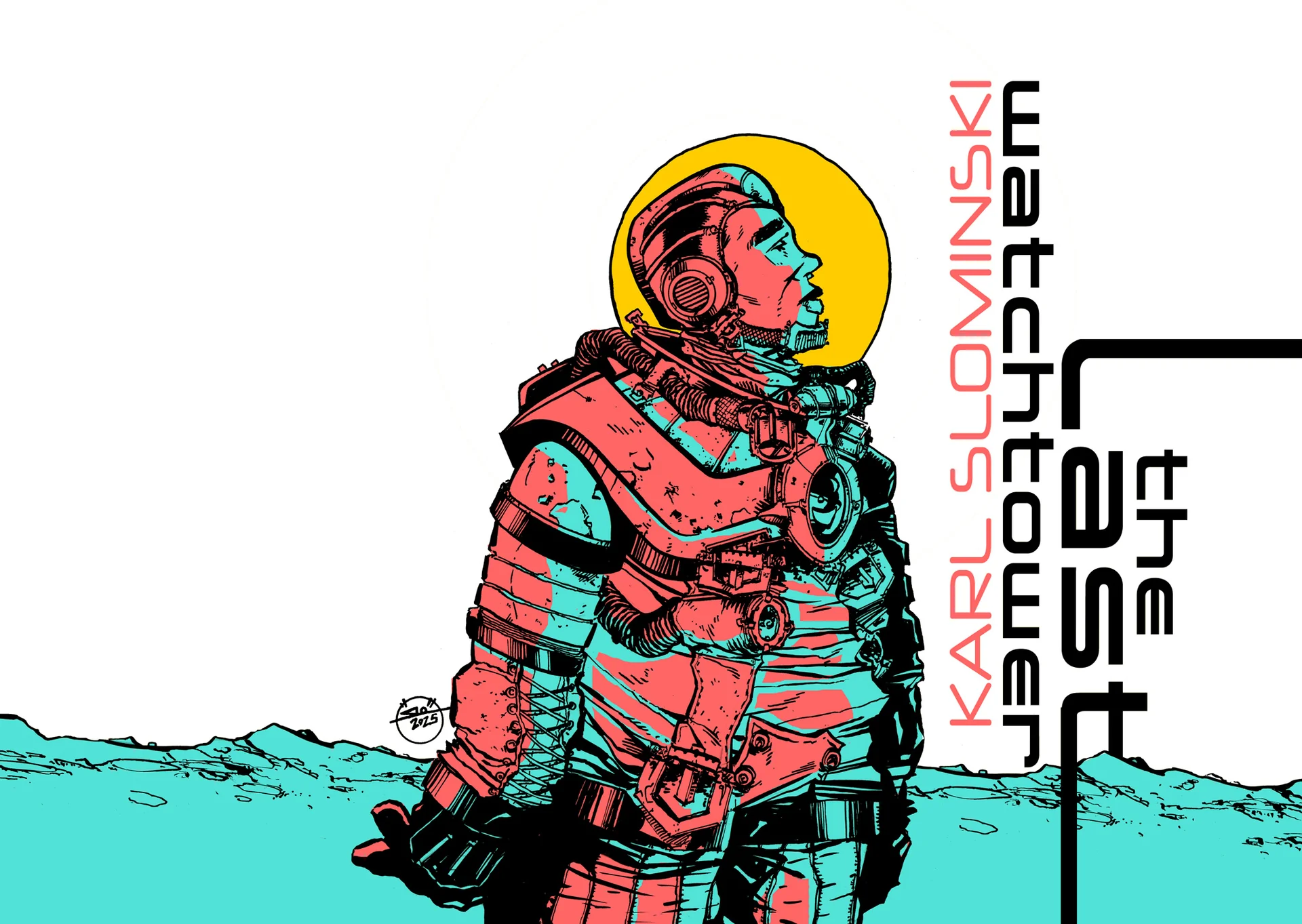
Every now and then a comic comes across the desk that does not walk in like “Look at me, I’m important.” Nah. It just sits down quietly, takes off the helmet, looks out the window at Earth from a lonely moon station, and then punches you right in the emotional ribs when you least expect it. That is The Last Watchtower by Karl Slominski, published by Black Panel Press, a graphic novel that starts with solitude, sci-fi dread, and cosmic catastrophe, but ends up being about grief, memory, love, regret, and the little pieces of life we keep carrying even after the universe has gone completely sideways.
Here is where the book gets slick. This is not a loud “save the world” story. The world may already be too far gone. This is not about laser battles every three pages or some macho space marine yelling into the void like he pays rent there. The Last Watchtower is quieter than that. Smarter too. It asks what happens when survival becomes routine. What happens when isolation stops feeling like a temporary condition and starts becoming your personality. Cal writes letters to Emma, someone from his past, and through those letters we feel the ache under the machinery. He is not just recording disasters. He is recording absence. That’s different and it hits!
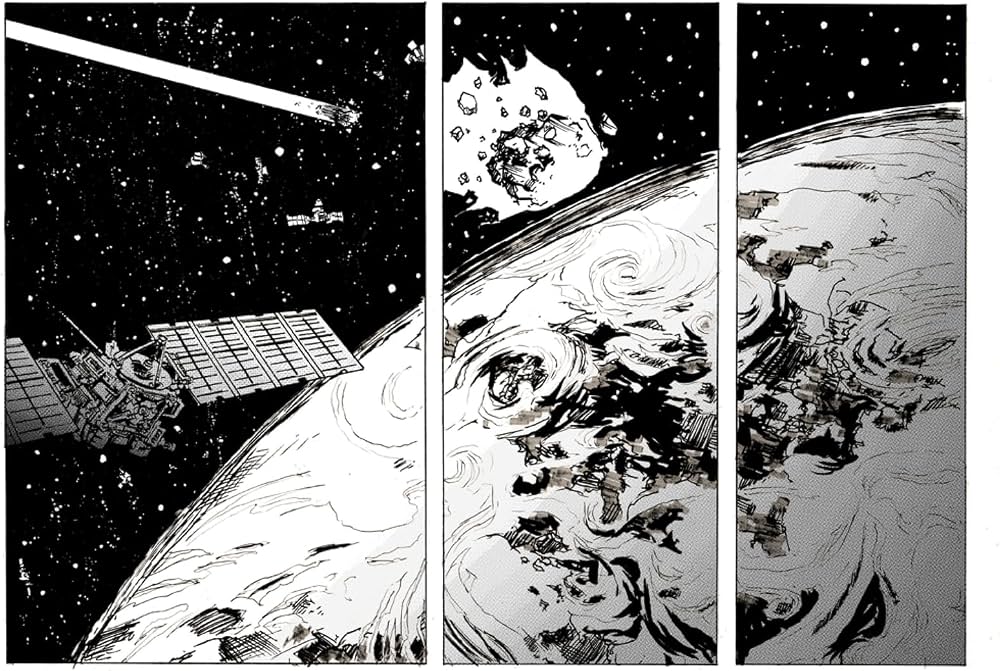
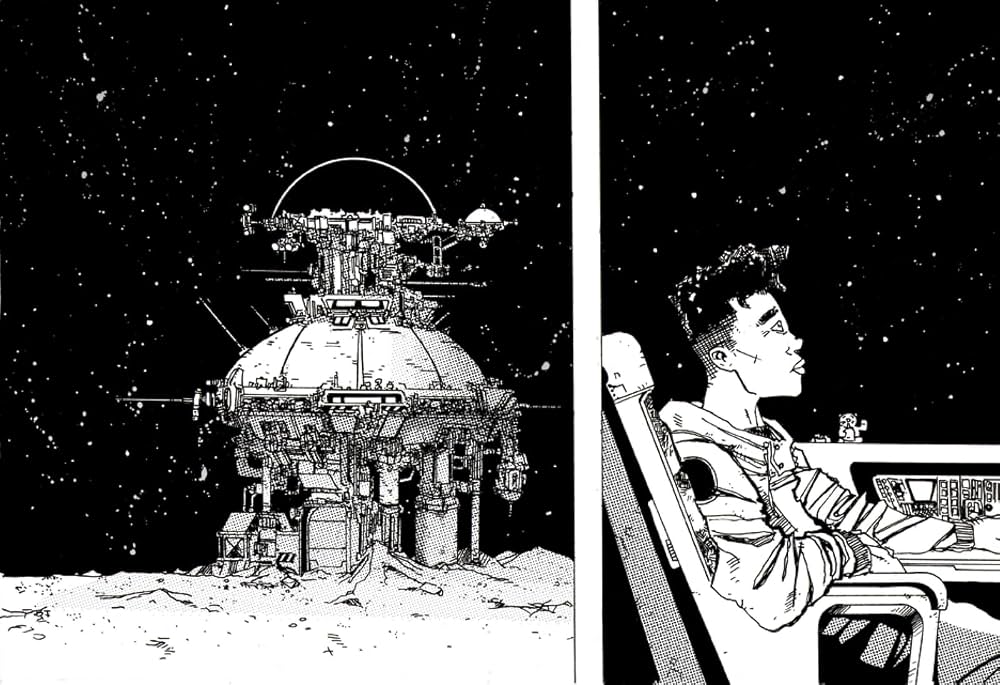
Slominski’s artwork is the first thing that grabs you by the neck. The book is drawn in stark black and white, and it has that raw, beautifully unvarnished energy of an artist drawing without fear. The linework feels alive. Not polished to death. Not sanded down into corporate sci-fi oatmeal. Alive. The moon landscapes feel cold and lonely, the station is packed with mechanical clutter and lived-in detail, and Earth becomes this distant wounded jewel hanging in the sky like a memory Cal cannot touch. The art gets dense when it needs to, almost obsessive with machinery, wreckage, cityscapes, and cosmic damage, but then it opens into these devastating quiet panels where one face, one pause, one tiny silhouette against the stars says more than ten pages of exposition ever could. That’s comics doing the work, fam. That’s the medium flexing.
Yo, the process behind this book is WILD! The entire thing was created without a traditional script, layouts, or revisions, with Slominski completing one finished page per day. That is not just a production note. That is the heartbeat of the book. You can feel it. The story moves with instinct. Sometimes it drifts. Sometimes it jolts. Sometimes it feels like the artist discovered the next emotional truth at the same time the reader did. That gives the whole graphic novel a dangerous, intimate quality, like we are watching someone build a spaceship while already floating in space. No safety net. No “let me workshop this for twelve committees.” Just ink, nerve, and momentum. Respect.
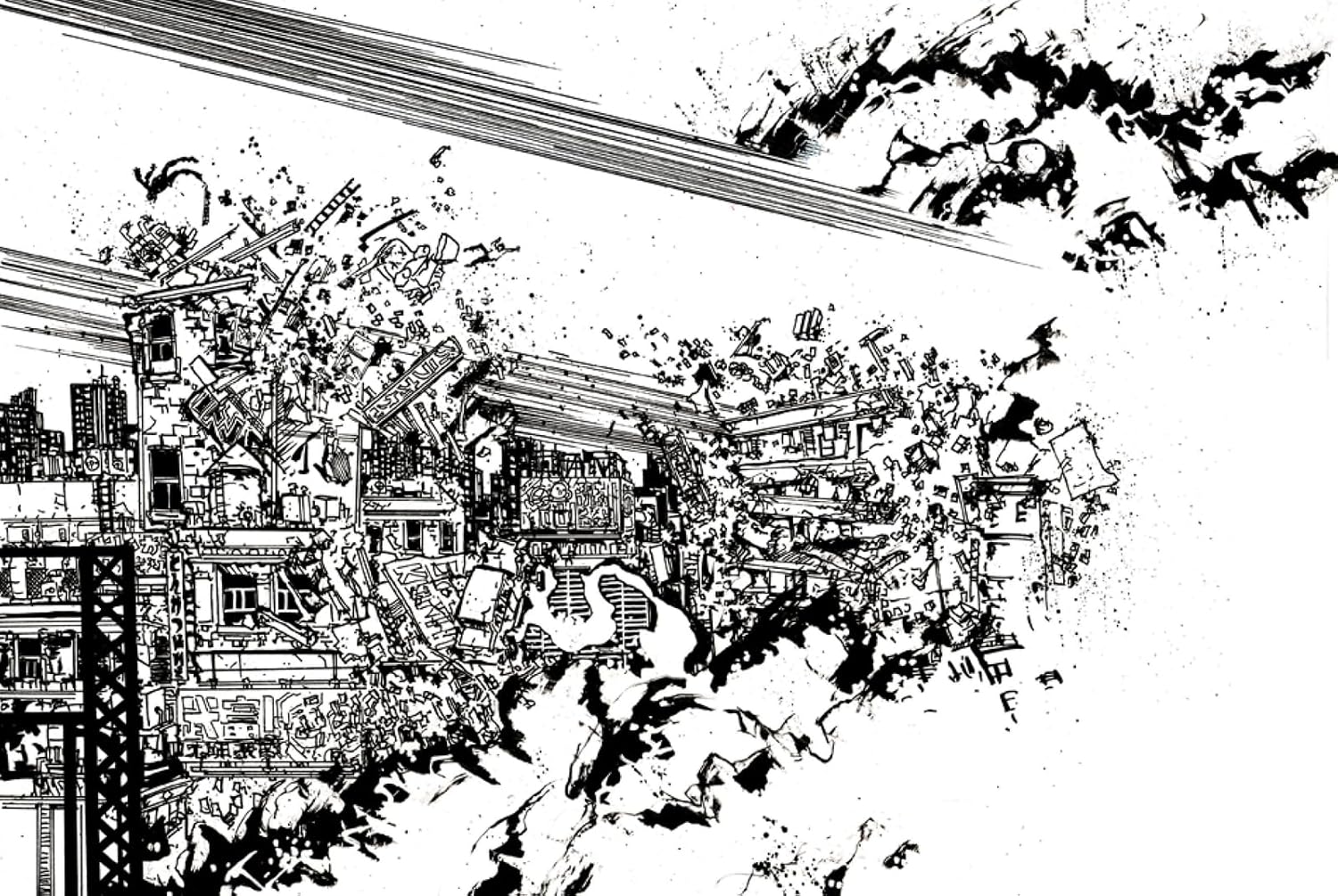
The opening disaster sequence is bananas in the best way. Before we even settle into Cal’s lonely routine, Slominski gives us destruction on a massive scale, cities cracking open, crowds frozen in panic, meteor strikes tearing through civilization like the universe got tired of our nonsense and started flipping tables. But the book does not linger there for cheap spectacle. It uses disaster as emotional architecture. Every catastrophe Cal watches from above becomes another reminder that distance does not protect you from grief. You can be thousands of miles away and still be standing right in the middle of the wreckage.
Cal himself is a strong lead because he is not presented like some shiny sci-fi hero. He is worn down, funny in that exhausted “I have been talking to machines too long” kind of way, and deeply human. His conversations with BLIP give the book some much-needed rhythm and bite. BLIP is hilarious, petty, weirdly loyal, and sometimes the only thing keeping the story from sinking entirely into cosmic sadness. Their banter has that odd couple flavor, like a man and his judgmental Alexa trapped in a moon base during the apocalypse. But under the jokes, there is real tenderness. BLIP is not just comic relief. BLIP is part of the ecosystem of Cal’s isolation, a mechanical witness to a human being slowly learning that numbness is not the same thing as healing.
Then the story changes temperature when a mysterious woman arrives after a strange crash near the station. I do not want to spoil the full shape of her role, because the pleasure of The Last Watchtower is watching it unfold like a dream that keeps remembering it is also a nightmare. But her presence cracks Cal’s routine open. Suddenly, the station is not just a workplace or a tomb. It becomes a confessional, a crossroads, a place where memory, time, and grief start speaking the same language. She brings questions Cal has avoided. She forces the book into deeper territory. And from there, the story becomes less about what happened to Earth and more about what happened inside Cal.
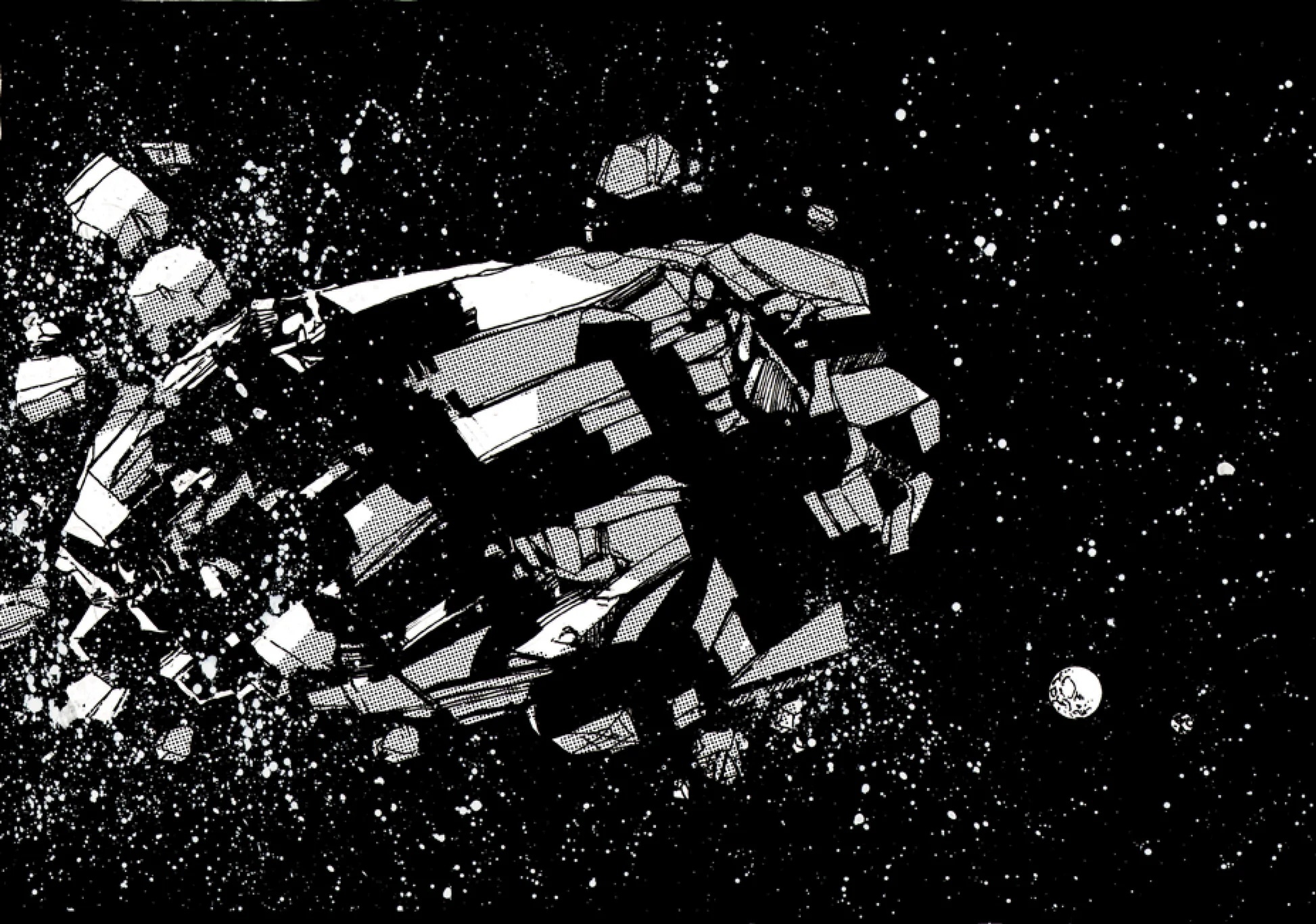
That is where The Last Watchtower really earns its emotional weight. This is a sci-fi story, yes, but the rockets and wreckage are not the main meal. They are the plate. The food is grief. The seasoning is memory. The hot sauce is regret. Slominski understands that loss does not always arrive as one clean dramatic moment. Sometimes it becomes a routine. A letter you keep writing. A window you keep staring through. A joke you keep making so nobody notices your hands shaking. Cal is haunted not by ghosts in the cheap horror sense, but by unfinished love. By the life he left behind. By all the moments that looked ordinary until distance made them sacred.
The book’s greatest strength is also where some readers may need to adjust their expectations. Because of its one-page-a-day, instinctive creation process, The Last Watchtower does not move like a conventional sci-fi adventure with neat chapter turns and perfectly engineered plot mechanics. It breathes differently. It wanders into silence. It loops through memories. It lets mood drive the ship. For some readers, especially those looking for hard sci-fi rules and tight procedural plotting, that looseness may feel unusual. But for me? That is part of the flavor. This is not sterile spaceship fiction. This is emotional jazz in a space suit. Sometimes the note bends. That’s the point.
The lettering and page design have a hand-made pulse that supports the entire experience. The balloons, captions, screens, and sound effects sit inside the artwork like they belong to this battered lunar world. There is a lot of visual texture here, and at times the pages can be busy, but the busyness makes sense because Cal’s world is cluttered with machines, reports, memories, alerts, and ghosts of conversations he wishes he could still have. Slominski uses negative space beautifully too, especially in the lunar and cosmic scenes. When the book goes quiet, it really goes quiet. You can almost hear the airlock seal. You can feel the silence pressing on the helmet. That is not easy to pull off on a page.
What I appreciate most is that The Last Watchtower never mistakes sadness for depth by itself. It has humor. It has weirdness. It has spectacle. It has big sci-fi ideas about time, memory, disaster, and existence. But underneath all that, it has compassion. The book is not wagging a finger at Cal for being broken. It is sitting next to him, like, “Yo, I get it. But you still gotta live.” That is the kind of emotional honesty that makes a graphic novel stick to your ribs after the last page. By the end, when the story leans into the idea that we are every moment we have ever experienced, it lands because the whole book has been proving that from page one. Every memory matters. Every laugh. Every mistake. Every goodbye you did not know was a goodbye yet. Damn.
Karl Slominski has crafted something raw, personal, visually fearless, and deeply human with The Last Watchtower. It is cosmic without losing the human face. It is experimental without becoming cold. It is melancholic without drowning in its own mood. And it is proof that comics can still surprise you when a creator trusts the page, trusts the process, and lets instinct drive the ship. Black Panel Press continues to be a strong home for work that feels personal and artistically daring, and this one deserves attention from readers who like their sci-fi with a heartbeat.
The Last Watchtower is not just about a man alone on the moon. It is about what we do with the lives we could not save, the people we still speak to when nobody is there, and the memories that refuse to die because maybe, just maybe, they are the truest version of time we get. Heavy? Yeah. Beautiful? Absolutely. Worth reading? No doubt. This one got soul in the spacesuit, fam. WEPA.
CRUSADERS SCORE:
4.5/5

IN SHOPS:
July 21st, 2026
Creator: Karl Slominski
Writer / Artist: Karl Slominski
Publisher: Black Panel Press



Leave a Reply
You must be logged in to post a comment.