
Unholy Nightmare #1 and #2 Comes Out Swinging With Blood, Fangs, Street Heat, and That Dirty Monster-Comic Swagger
·Al Mega
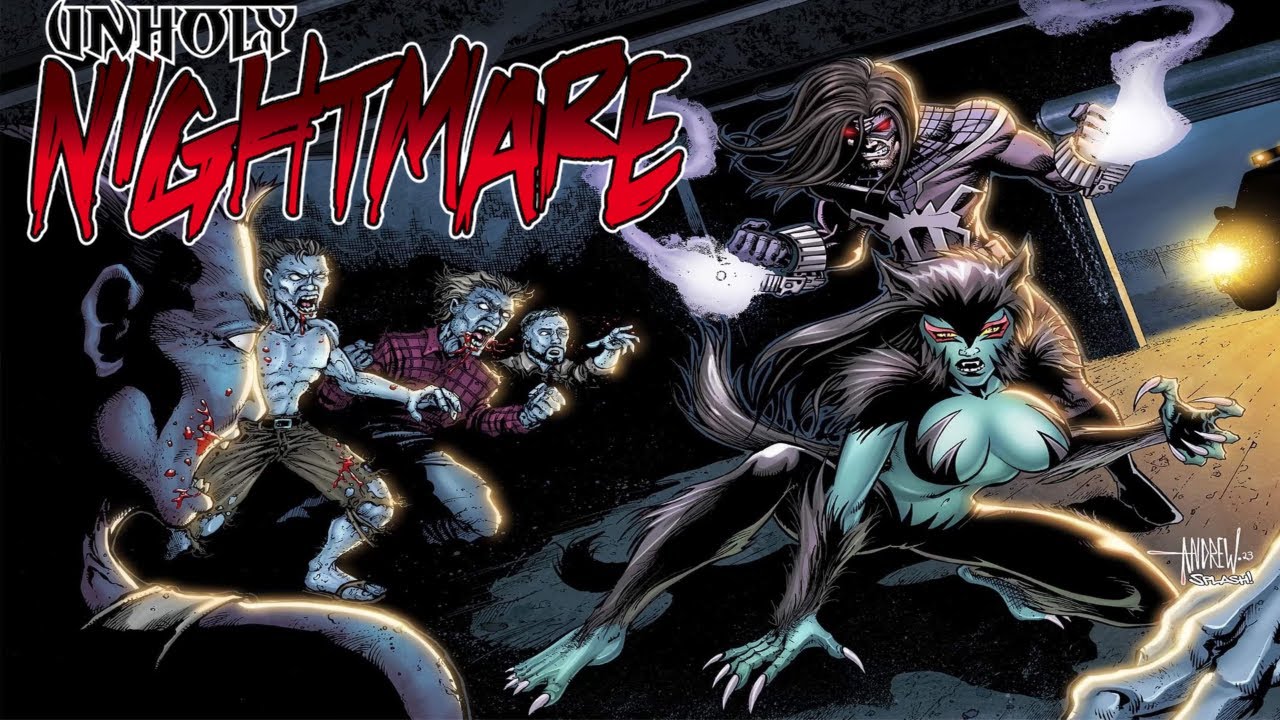
WEPA, fam, pull up a chair, grab your cafecito, and let’s talk about Unholy Nightmare #1 and #2 because this right here is not one of those polite little comics that knocks softly and asks permission to enter. Nah, son. This joint kicks the door clean off the hinges, tracks blood across the carpet, lets a monster hiss in your face, then has the nerve to ask, “Yo, why you looking shook?” That is the energy!
TCM Press comes through with Unholy Nightmare like they found a lost long box from the 90s, cracked it open under a full moon, and something crawled out smelling like gun smoke, city grime, creature blood, and bad decisions. Writer Dolan Waddick and artist Aurelio Mazzara are not trying to give you a quiet little bedtime story. They are giving you a nightmare with chrome teeth. A street-level horror-action comic with fangs, guns, freaks, cops, criminals, vigilante madness, and that big, loud, unapologetic comic book flavor that reminds you why indie comics still got that raw “anything can happen” electricity.
Set in Gary, Indiana, Unholy Nightmare starts with a city that already feels cursed before the supernatural even shows up. Empty homes. Dead factories. Streets with scars. You can feel the rot in the bricks. This is important because the book does not drop monsters into a clean superhero playground. It drops them into a place already choking on crime, desperation, and old pain. That gives the whole thing weight. The horror does not feel random. It feels like the city opened its mouth and finally screamed.
 Issue #1 is the ignition. Boom. We meet the False Disciples, a nasty crew moving poison through the streets, and the situation is already dirty before anybody starts sprouting claws. Jenny Talbot enters the story with that undercover cop pressure sitting heavy on her shoulders. She is not walking around like some plastic action figure with a badge. She feels tense. Alert. Human. The kind of character who knows one wrong move can turn the whole night into a funeral. She is trying to do the job, stay alive, and keep the mission from turning into a disaster. Spoiler without spoiling too much? The disaster clocks in early.
Then comes The Recluse, aka Edward Loftmore, and ay yo, this dude is drama with a cape and a problem. I mean that as a compliment. He does not just enter the story. He arrives. Big shadow. Red eyes. Creepy presence. Vigilante confidence. He has that “I have been waiting in the corner of your nightmare” vibe, and the book knows how to present him like a proper gothic menace. He is theatrical, but not corny. That balance matters. In the wrong hands, a character like this can slide into cheese real quick. Here, he feels like a mix of urban legend, rich-boy mystery, monster hunter, and street-level superhero who absolutely has no interest in your nonsense.
Issue #1 moves with the speed of somebody being chased down a dark block at 2:00 AM. The drug deal setup gives the story a crime-thriller backbone, but then the supernatural elements start crawling in, and the whole comic turns into a bloody carnival ride. Jenny’s mission crashes into The Recluse’s world, and suddenly everybody is dealing with more than guns and narcotics. We get monsters. We get mayhem. We get that “oh, this city has been hiding something uglier than crime” feeling. Word.
Aurelio Mazzara’s artwork brings the muscle. Big faces. Big expressions. Big action. Big danger. The pages have that pumped-up, high-impact style that feels built for readers who grew up loving comics that were not afraid to be loud. Characters grimace, snarl, leap, bleed, and crash through panels with real comic-book bravado. The monster work especially pops because the creatures do not feel like background threats. They feel like personalities with teeth. Jenny’s physical and emotional shift is another highlight. You can see confusion, rage, fear, instinct, and survival all fighting for space inside her. That is the good stuff.
Gene Jimenez’s colors deserve love too because this comic lives in heavy mood lighting. Blues, reds, greens, shadows, moonlight, blood flashes, all of it builds that late-night horror pulse. It is not subtle, but why would it be? This is not a quiet museum piece. This is monster pulp in a leather jacket. Kel Nuttall’s lettering keeps the noise moving without letting it become a messy traffic jam. Gunshots, screams, growls, impact sounds, dialogue, all of it has to live together on pages that are already throwing elbows. The lettering keeps the rhythm clean.
Now let’s talk about how Issue #1 slides into Issue #2, because this is where the series shows it has more in the tank than just “look, monsters!” Issue #1 is the setup and detonation. It puts Jenny into a nightmare she cannot unsee and introduces The Recluse as this strange, dangerous figure tied to a much bigger supernatural ecosystem. By the time Issue #1 closes, the story has cracked open a door, and on the other side of that door is a whole monster underworld looking back like, “Yeah, we been here. You late.”
 Issue #2 does not waste time. It hits the gas with a wild chase sequence that feels like somebody mashed police pursuit footage, creature-feature chaos, and comic book insanity into one loud blender. Cars fly. Cops panic. Something impossible tears through the night. The action is bigger, cleaner, and more confident. If Issue #1 says, “Here is the nightmare,” Issue #2 says, “Now buckle up, because the nightmare got wheels.”
But here is what makes Issue #2 work even better for me: it actually slows down when it needs to. Not for long. This book has caffeine in its bloodstream. But it gives us time with Edward and Jenny after the chaos, and that is where the series starts building a stronger emotional hook. Jenny is not just reacting to the violence outside her. She is dealing with the horror inside herself. She has changed. She knows it. Edward knows it. And their dynamic gets real interesting real fast.
Their scenes have this weird, funny, tense energy. Jenny is trying to understand what happened to her, Edward is trying to help without sounding like a total rich weirdo, and the whole thing has this “beauty and the beast, but everybody needs therapy” vibe. Dead-ass. There is chemistry there, but it is messy chemistry. Trauma chemistry. Survival chemistry. Not soft-focus romance with violins. More like, “We almost died, you might be a monster, I am definitely not normal, and somehow breakfast is happening.” That kind of weird human stuff gives the story flavor.
Issue #2 also expands the mythology in a big way. Vlad. The Golem. Dr. Herbert West. The Tome of Leviathan. A wider monster circle. Suddenly, Unholy Nightmare is not just about Jenny and The Recluse fighting street criminals and creatures in the dark. Nah. The chessboard gets bigger. There are supernatural players with history, agendas, power, and secrets. That is where the book starts flashing its long-game potential. You can feel the creators setting up a universe, not just a two-issue monster brawl.
And listen, I love a good monster brawl. I am not above it. Sometimes I want a comic to act like a werewolf got into a fireworks store. But the fact that this series is also building lore, character relationships, secret histories, and a possible horror-hero mythology? That is what gives it legs. Or claws. Maybe both.
The book does have moments where it moves so fast you might want to tap it on the shoulder and say, “Yo, breathe for half a second.” Some emotional beats could use a little extra space. Jenny’s transformation, Edward’s background, the monster world, the police fallout, the villain energy, the mythology, all of it comes charging in like rush hour on the FDR. That pace gives the comic serious momentum, but a few quieter pauses would make some of the bigger revelations hit even harder. Still, I will take a comic with too much fire over one that sits there like cold pizza pretending to be deep.
What Unholy Nightmare gets right is attitude. It knows what it is. It is not embarrassed by pulp. It is not running away from big poses, loud violence, monster madness, or gothic superhero energy. It embraces the madness. The series has that throwback punch, but it does not feel like cosplay. It feels like creators who genuinely love this lane and want to push a blood-soaked hot rod straight through it.
Issue #1 is the hook. It gives us the streets, the mission, the danger, Jenny, The Recluse, and the first real taste of the supernatural sickness underneath everything. Issue #2 is the escalation. It takes the fallout, throws it into a chase, deepens Jenny and Edward’s relationship, opens up the mythology, and lets the monster universe step out of the shadows. Together, these two issues work like a one-two combo. Jab. Cross. Fang to the throat.
This is indie horror-action with swagger. It has grit. It has personality. It has big visual swings. It has blood on its boots and a smirk on its face. And most importantly, it makes you want Issue #3. That is the whole game, fam. Make me care enough to pull up for the next round. Unholy Nightmare does that.
Unholy Nightmare #1 and #2 is a loud, bloody, stylish, street crime meets monster mythology ride that comes packed with 90s comic book muscle and indie horror attitude. Dolan Waddick and Aurelio Mazzara, backed by Gene Jimenez, Kel Nuttall, Gaetano Petrigno, Aaron Sparrow, Murphey, and the TCM Press crew, deliver a savage opening act with bite, speed, and a growing supernatural world worth keeping your eyes on. This one has claws, corazón, and chaos. WEPA.
CRUSADERS SCORE:
4/5

Created by Dolan Waddick and Aurelio Mazzara.
Issue #1 credits: Writer: Dolan Waddick. Illustrator: Aurelio Mazzara. Colorist: Gene Jimenez. Letterer: Kel Nuttall. Editors: Aaron Sparrow and Murphey.
Issue #2 credits: Writer: Dolan Waddick. Illustrator: Aurelio Mazzara. Inker: Gaetano Petrigno. Colorist: Gene Jimenez. Letterer: Kel Nuttall. Editor: Aaron Sparrow.
Issue #2 Kickstarter Cover Artists: Aurelio Mazzara, JC Grande, Andrew Mangum, Franck Uzan, Izik Bell, and Tristarr.
Colors on those covers by Dan Kemp, except Tristarr’s.
Published by TCM Press, powered by The Comic Mint.

Leave a Reply
You must be logged in to post a comment.