
The Dumbest Game in Comics Is Watching Somebody Else Win
·Al Mega
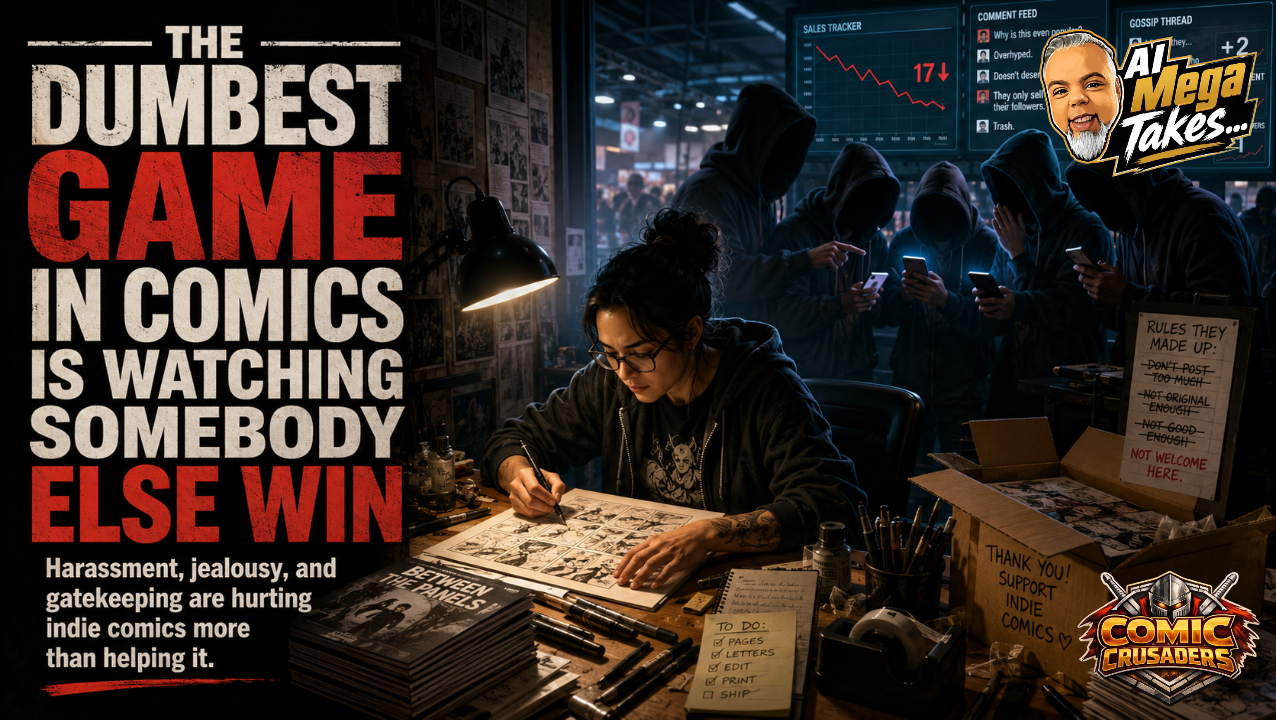
There is a special kind of broke energy floating around parts of the comic book industry right now, and no, I am not talking about money. I am talking about spirit. Vision. Focus. That grown-folk ability to look at your own plate before counting the rice and beans on somebody else’s. Because somewhere along the way, a few loud corners of this business decided that building comics was less important than stalking other creators’ numbers, mocking their audience, questioning their legitimacy, and praying on their downfall like hate is a marketing plan. Fam, that is NOT strategy. That is sadness with a Wi-Fi connection.
Indie comics should be having its biggest moment. The tools are here. Crowdfunding is here. Digital platforms are here. Direct-to-reader sales are here. Podcasts, newsletters, YouTube, TikTok, conventions, Discord communities creators have more ways than ever to reach readers without begging for a seat at the old table. But instead of everybody sharpening their pencils, improving their books, learning fulfillment, building trust, and actually delivering what they promised, too many people are acting like the industry is a high school cafeteria with variant covers. And let me say this plain: if you spend more time tracking another creator’s sales than promoting your own book, your problem is not them. Your problem is you.
That is the sickness nobody wants to call out. The comic book business already has enough walls. The Big Two still dominate attention. Retail is still tough. Printing costs are ugly. Shipping can hit you like a folding chair from 1998 ECW. Readers are more careful with their money. Trust is harder to earn. So when indie creators start throwing rocks at each other over politics, personalities, perceived alliances, old grudges, fanbase tribalism, or because somebody did not kiss the right ring, the only people laughing are the big corporate machines.
They do not need to crush indie comics when indie comics is busy tripping itself in the hallway. And let’s not pretend this behavior is “criticism.” Real criticism is healthy. Reviews matter. Accountability matters. If a creator takes money and does not deliver, that deserves questions. If a campaign misleads readers, call it out. If a publisher treats people dirty, bring receipts. That is journalism. That is community protection. That is business hygiene. But what we keep seeing is something else. It is obsession dressed up as commentary. It is people monitoring creators they claim to hate, watching every campaign update, every sales number, every delay, every livestream, every fan interaction, just waiting to pop out like, “Aha! See!” My brother in comics, if you hate the restaurant so much, why are you outside reading the menu every night? Go cook.
The dumbest part is that this behavior does not make the attacker look powerful. It makes them look bothered. And not regular bothered basement-with-a-spreadsheet bothered. The kind of bothered where you stop being a creator and become a professional hall monitor for somebody else’s success. That is poison for indie comics because new readers see the drama before they see the books. New creators see the harassment before they see the opportunity. Fans who just want good stories get dragged into weird little faction wars where every purchase becomes a political statement, every review becomes a loyalty test, and every creator is treated like they must pass some imaginary purity exam before they are allowed to win. Nah. Miss me with that.
The indie scene cannot grow if it keeps acting like a gated community run by people who lost the keys. There is no one true way to make comics. There is no sacred clubhouse. There is no crown. If a creator builds an audience outside the traditional pipeline, good. If a creator brings new readers into comics, even better. If those readers do not look, vote, talk, dress, spend, or think like your usual crowd, congratulations that is called growth. You know, the thing everybody claims they want until it shows up wearing different sneakers.
The industry needs more readers, not more referees. More books, not more beef. More fulfillment updates, not more subtweets. More finished pages, not more two-hour videos about why somebody else’s fanbase is “wrong.” And let’s be honest, some of this hate smells like fear. Fear that another creator figured out something you did not. Fear that readers are not waiting for permission anymore. Fear that independence actually means independence, not “independent as long as you agree with my little crew.” Fear that somebody else can sell, ship, scale, and connect without playing by the dusty rules that made other people feel important.
That is why the sales-watching gets so nasty. Because numbers expose things. They expose who has an audience and who only has noise. They expose who built trust and who built excuses. They expose who delivers and who keeps moving the goalpost like it owes them rent. And yes, delivery matters. In crowdfunding especially, delivery is not a cute bonus. It is the whole deal. Readers are not ATMs with pull lists. They are supporters. They are believers. They are people putting money into a promise. So before anyone spends another week clowning another creator’s campaign, maybe ask the uncomfortable question: did you take care of your own house first? Because nothing looks weaker than throwing shade with unfinished business behind you.
Comic books were built on imagination, but the business survives on trust. That trust gets cracked every time creators turn fans into foot soldiers. It gets cracked every time a community rewards harassment because it feels like entertainment. It gets cracked every time someone acts like another person’s success is an emergency. Success is not an emergency. It is proof that there is still money, attention, and passion out there for comics when creators do the work and readers feel respected. That should make everybody excited. Instead, some folks get mad. And that tells the whole story.
So here is the call: stop acting like indie comics is a cage match where only one creator gets to leave with the belt. This is not Highlander with printer invoices. There can be more than one winner. There can be more than one audience. There can be horror fans, superhero fans, manga fans, sci-fi fans, political fans, apolitical fans, collectors, digital readers, Kickstarter backers, shop regulars, casual browsers, and everybody in between.
The mission should be simple: make good books, treat readers right, deliver what you promised, and stop measuring your value by whether someone else fails. Because if the indie scene keeps wasting energy on jealousy, harassment, and petty scoreboard nonsense, then congratulations the Big Two do not have to beat you. You already volunteered. And that, mi gente, is the dumbest comic book story of all!
WEPAAAA…
Editorial Disclaimer:
This article is an opinion-based editorial reflecting my personal observations from public timelines, comment threads, creator posts, fan reactions, and ongoing conversations across different social media platforms. It is not intended as a personal attack on any individual, fanbase, company, or community. The focus is on patterns of behavior within the comic book industry including harassment, gatekeeping, sales-watching, and creator-on-creator negativity and how those patterns can hurt indie comics as a whole. Readers are encouraged to form their own opinions, check context, and support the creators and books that speak to them.
*Ai Disclosure: The main image includes AI-assisted artwork reviewed by Comic Crusaders before publication.
Leave a Reply
You must be logged in to post a comment.