
John Byrne’s X-Men: Elsewhen Sold Out Before Shelves, So Who Gets to Tell Fans What They’re Allowed to Buy?
·Al Mega
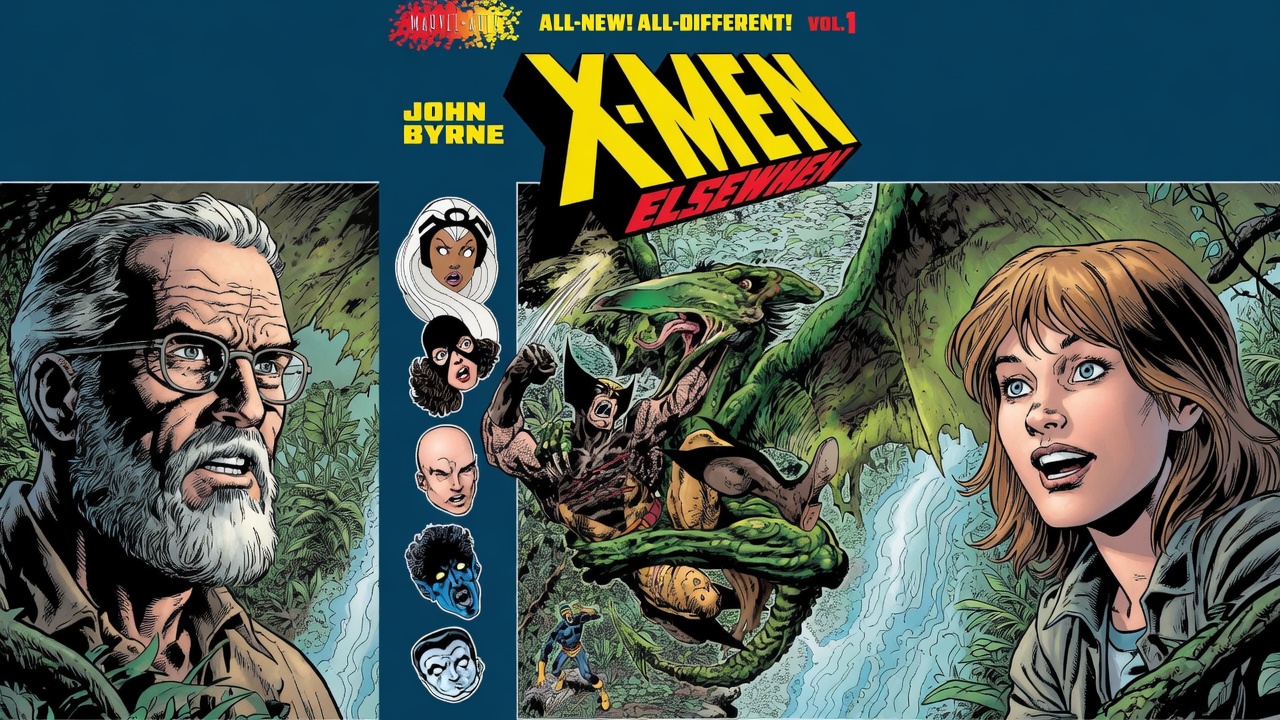
John Byrne returned to the X-Men with a book fans clearly wanted. Then Heather Antos tried turning a sellout into a culture-war checkpoint. Nah, fam. Let readers decide.
Ay yo, Crusaders, pull up a chair because this one got claws, receipts, and enough industry side-eye to power Cerebro on a blackout night!
John Byrne’s X-Men: Elsewhen Volume 1 drops June 23 through Abrams ComicArts’ Marvel Arts line, and before the book even had a chance to breathe on comic shop shelves, the first printing was already gone on pre-orders. Not “doing okay.” Not “getting buzz.” Sold out. A second printing is already moving because the audience did what audiences do when they actually want something: they showed up with wallets, not think pieces.
That, mi gente, is the part some folks in the comics business still don’t seem to understand. Readers are not NPCs waiting for industry permission. They are not little plastic figures on somebody’s ideological chessboard. They like what they like, they buy what they buy, and when a 75-year-old comics legend who helped define the modern X-Men drops a long-lost passion project, people are going to pay attention. That’s not a conspiracy. That’s called demand! Wild concept, right?
Byrne reportedly spent years creating X-Men: Elsewhen as a free fan project on his own website, building a continuation of the X-Men era that made him one of the most important artists in superhero comics. No guaranteed payday. No corporate marketing department. No shiny launch event with branded cupcakes. Just a veteran creator sitting down and drawing the characters because, love him or argue with him, the man clearly still has ink in his veins. In his interview with The Hollywood Reporter, Byrne described the project as possibly his “leaving in a blaze of glory.” That’s heavy bruh. That’s not some random variant cover hustle. That’s an old-skool creator staring at the sunset and saying, “Let me take one more ride.”
Then came the online grenade. Heather Antos, an IDW Publishing editor with a long résumé across Marvel, Star Wars, Valiant, and IDW, posted on Bluesky: “During PRIDE MONTH. REALLY, MARVEL?! Do not buy this comic.” She followed that by calling Byrne a transphobe and accusing him of pushing transphobic ideology for years.
Bluesky Post:
During PRIDE MONTH. REALLY, MARVEL?!Do not buy this comic.www.thepopverse.com/comics-x-men…
— Heather Antos (@heatherantos.bsky.social) 2026-06-18T20:41:27.665Z
Now let’s be grown adults here. Byrne’s past comments about transgender people are not imaginary. They were covered years ago, and many readers found them ugly, hurtful, and way out of pocket. That criticism is fair territory. If you say something publicly, especially something aimed at a vulnerable group, people get to respond publicly. That is not cancel culture. That is cause and effect wearing Timbs.
Here is where the conversation goes sideways faster than a bootleg Spider-Mobile with one loose wheel: criticism is one thing. A professional editor at one publisher publicly telling readers not to buy a book from another publisher is something else. That is not just “I disagree with John Byrne.” That is an attempted consumer blockade. That is somebody standing outside the comic shop doorway with a moral clipboard asking, “Excuse me, did this purchase pass my purity inspection?” And fam, no. Absolutely not. Who made ANY editor the sheriff of the spinner rack?
Comic readers do not need a bouncer at the register. They need good books, honest information, and the freedom to decide where their money goes. If a reader says, “I cannot support Byrne because of what he said,” that is their choice. Respect it. If another reader says, “I hate those comments, but I still want this X-Men book because the work matters to me,” that is also their choice. Respect that too. The minute industry professionals start acting like personal boycotts should become marching orders for everybody else, we are not talking about accountability anymore. We are talking about gatekeeping with better branding.
Let’s keep it a buck: comics has been losing enough readers without professionals treating the remaining audience like they need moral supervision. The industry keeps asking why people are tired, why shops are struggling, why fans feel preached at, why longtime collectors roll their eyes every time another online pile-on starts. Then, right on cue, somebody sees a book selling out and decides the real emergency is not whether readers are excited it is whether those readers are excited about the “correct” thing. That is exhausting. That is wack. That is how you turn comics from a playground of imagination into a HOA meeting with capes, It’s tiring!
Antos has every right to say she does not support Byrne. She has every right to criticize Marvel, Abrams, or anybody else involved. Nobody should pretend creators’ words vanish once the product hits the shelf. But there is a difference between saying, “Here is why I personally will not support this,” and saying, “Do not buy this comic.” One invites readers into a conversation. The other tries to shut the conversation down before the book even arrives.
That matters because X-Men itself has always lived in uncomfortable tension. These stories are about outsiders, fear, prejudice, identity, power, family, survival, and society deciding who counts as human. So yes, the irony is thick enough to spread on a bodega sandwich. A franchise built on metaphor is now sitting in the middle of a real argument about identity, legacy, harm, art, and who gets to belong. But the answer cannot be “only the loudest professional on social media gets to decide.”
The audience already voted with pre-orders. That does not mean every buyer endorses every statement Byrne ever made. That is lazy thinking. People buy comics for complicated reasons: nostalgia, art, character love, curiosity, completionism, creative history, or because they just want to see Wolverine and Sauron throwing hands like Saturday morning never died. A purchase is not always a manifesto. Sometimes it is just a fan saying, “Yo, this looks dope.”
That is the danger in this modern comics climate. Everything becomes a loyalty test. Every book becomes a referendum. Every creator becomes either saint or villain. Every reader gets shoved into a box. You bought the book? You must agree with everything the creator ever said. You skipped the book? You must hate classic comics. That kind of thinking is lazy, cheap, and allergic to nuance. Real life is messier than that. So are comics. That is kind of the point.
Byrne’s legacy is massive and messy. You cannot tell the story of modern X-Men, Fantastic Four, Superman, Alpha Flight, She-Hulk, or mainstream superhero storytelling without him. You also cannot pretend his past comments have not hurt people. Both things can be true. Grown-up media criticism lives in that uncomfortable space. Fan policing does not.
The bigger problem is the industry habit of confusing advocacy with authority. Want better representation? That’s Great! Want more creators from different backgrounds? Awesome. Want publishers to stop treating marginalized readers like seasonal marketing copy? Gotcha! I am all for it. Diversity done right makes comics stronger, richer, and more honest. But when advocacy becomes scolding, and scolding becomes boycotting, and boycotting becomes “I decide what fans should not buy,” people tune out, including me! Not because they hate inclusion. Because nobody likes being talked down to like they left their brain in the longbox.
That is where Antos’ post landed with a thud for a lot of fans. Not because every critic of her is automatically allegedly right. Some of the internet backlash around Antos over the years has been nasty, personal, and straight-up garbage. Let’s not rewrite history with crayons. She has also been the target of harassment, especially during the infamous “milkshake” mess years ago, remember that, when a harmless photo of women in comics became another excuse for the worst corners of fandom to act like somebody opened a portal to the basement. That was ridiculous then, and it is ridiculous now.
Being previously targeted does not make every future statement untouchable. Past harassment does not grant a lifetime pass from criticism. If you are an industry professional and you publicly tell people not to buy a book, readers get to ask why. They get to ask whether that is appropriate. They get to ask whether comics professionals should be cheering reader enthusiasm or trying to control it. That is not harassment. That is accountability going both ways mami, ya heard!
Here is the part the industry needs to hear: comic fans are not anti-message. They are anti-bad-message, anti-forced-message, anti-lecture, anti-hypocrisy, and very, very anti-being-told what they are allowed to enjoy. Fans accepted the X-Men as metaphor for decades. They embraced stories about racism, fear, government abuse, identity, found family, and persecution. These readers are not delicate little snowflakes who faint at meaning. They just know when story comes first and when agenda walks in wearing the story’s skin like a cheap Halloween costume. That is the difference.
A great comic can carry politics, pain, identity, faith, anger, love, rebellion, all of it. Comics were never “just punching.” But when the industry starts marketing virtue harder than story, readers smell it. When editors and creators act like sales are less important than social-media approval, readers smell it. When a classic creator’s book sells out and the reaction from some professionals is not curiosity, not analysis, not even balanced criticism, but “Do not buy this,” readers really smell it. And what they smell is control.
John Byrne’s X-Men: Elsewhen selling out before release should make the comics industry ask a serious question: what is the audience hungry for that the market has not been feeding them? Maybe it is classic craft. Maybe it is nostalgia. Maybe it is curiosity. Maybe it is the simple thrill of seeing a legendary creator return to characters that changed superhero comics forever. Maybe it is all of the above. But the answer is not to wag a finger at the buyers like they got caught stealing candy from the corner bodega. The answer is to listen.
If you want readers to reject a book, make your case. Bring receipts. Speak with conviction. But do not act shocked when readers hear you and still decide for themselves. That is how free choice works. That is how fandom works. That is how the marketplace works. The audience is not always polite, not always fair, not always easy to predict but the audience is real. And right now, the audience looked at X-Men: Elsewhen and said, “Yeah, we want that.” So where does that leave us?
It leaves us with a book that sold out before release. A creator with a towering legacy and documented controversy. An editor with every right to criticize him, but no special right to dictate the shelf. And a comics industry that better learn the difference between conversation and commandment before it keeps pushing readers out the door.
Because at the end of the day, Crusaders, comic shops are not churches, courtrooms, or political rallies. They are places where people chase wonder. Sometimes that wonder comes from brand-new voices. Sometimes it comes from legends taking one final swing. Sometimes it comes from a messy, complicated old creator drawing the characters that made him famous because the story still would not leave him alone.
You do not have to buy it. You do not have to boycott it. You do not have to defend every word ever spoken by the person who made it. But you do get to choose. And that choice belongs to the reader not Heather Antos, not Marvel, not Abrams, not Twitter, not Bluesky, not the outrage machine, not even loudmouths like me yelling WEPAAA from the digital rooftop.
The readers decide.
And on this one?
They already did!
Order Your Copy of X-Men: Elsewhen (Volume 1 of 3) A Graphic Novel at:
https://amzn.to/4w6tvml
*Ai Disclosure: The main image includes AI-assisted artwork reviewed by Comic Crusaders before publication.
Leave a Reply
You must be logged in to post a comment.