
Things From Another World Is Closing And Comics Better Pay Attention
·Al Mega
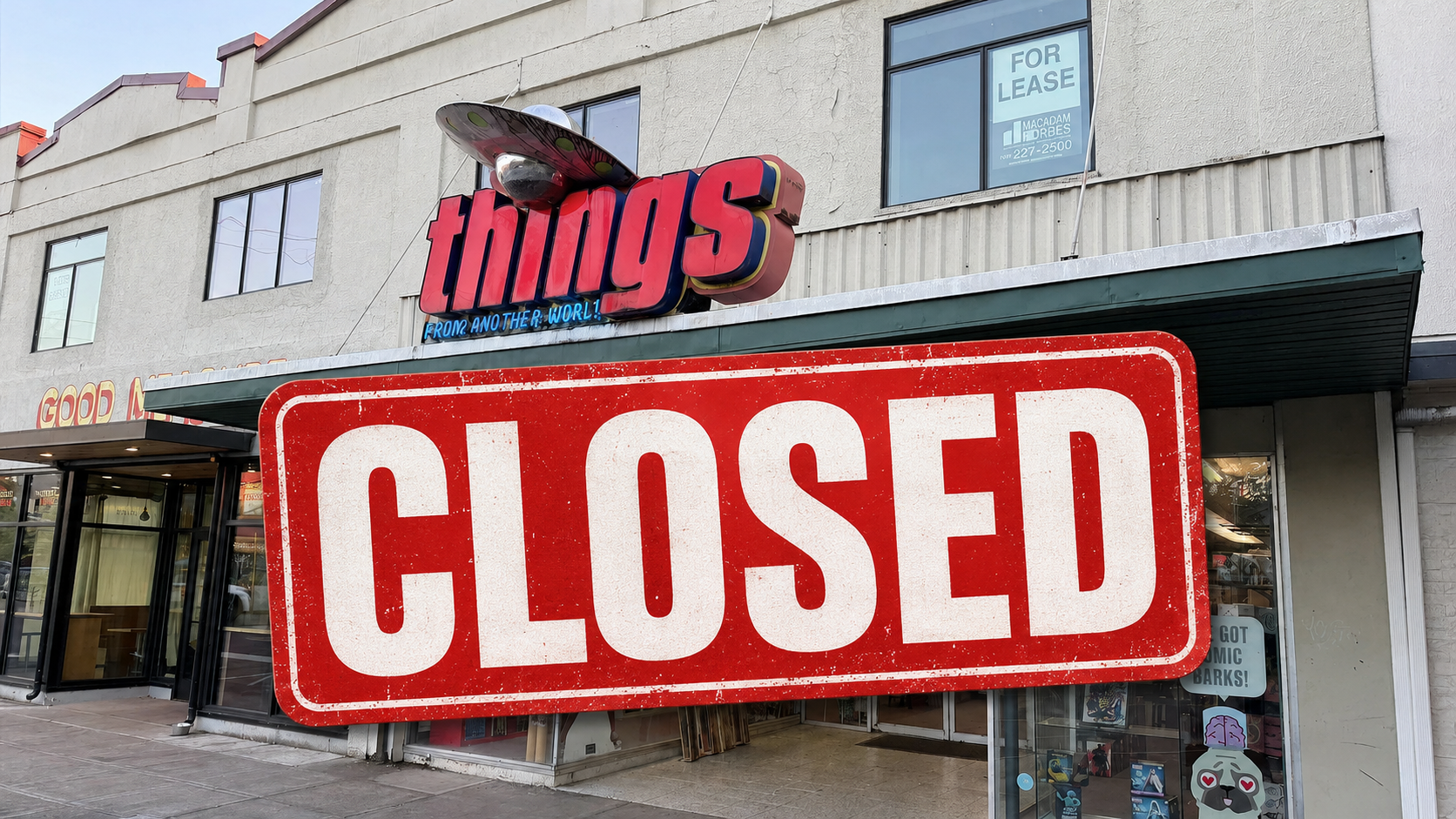
The Comic Shop Warning Shot:
Why Things From Another World Closing Should Wake Up the Entire Industry
There is a certain kind of silence that hits different when a comic shop closes. It is not just the sound of a register shutting down, a lease ending, or a pull-list box getting emptied for the last time. It is the sound of a community losing one of its living rooms. And now, with Dark Horse Comics closing the last remaining Things From Another World stores, the comic book industry has one of those moments staring it dead in the face.
This is not just another retail story. This is not “oh, another store closed, that stinks, anyway what variant cover dropped this week?” Nah. This is bigger than that. This is a warning shot.
Things From Another World was not some random mall kiosk selling superhero keychains next to phone cases and overpriced pretzels. Its roots go back to the retail foundation that helped build Dark Horse Comics itself. Before Dark Horse became the home of Hellboy, Sin City, The Umbrella Academy, Usagi Yojimbo, licensed classics, creator-owned gems, and one of the strongest independent identities in the business, there was the store. There was the shop. There was the physical place where comics were not just sold, but discovered.
That matters.
Dark Horse’s decision to close all three remaining Things From Another World locations the Oregon stores in Milwaukie and Beaverton, and the California location at Universal CityWalk comes at a time when the comics business is living inside a wild contradiction. On one hand, the industry is not dead. Far from it. Sales reports have shown growth in the direct market. Graphic novels continue to reach readers through bookstores, schools, libraries, manga aisles, crowdfunding, conventions, and digital platforms. Comic book stories remain powerful fuel for film, television, streaming, games, collectibles, and every other entertainment machine looking for the next universe to mine. But on the other hand, legacy retail keeps taking body shots.
That is the part folks need to stop dancing around. The industry can be growing and still have serious structural problems. Both things can be true at the same time. That is not negativity. That is adulthood. Comics do not need cheerleaders pretending everything is fine while the roof leaks. Comics need builders. And right now, the old house is creaking.
The closure of Things From Another World lands after a brutal stretch for the traditional comic shop ecosystem. Diamond Comic Distributors, once the dominant force in getting comics to stores, filed for bankruptcy in 2025. That was not a minor accounting issue. That was one of the industry’s old pillars cracking in public. For decades, Diamond shaped how comic shops ordered, received, and planned their business. When that system shook, the entire direct market felt the vibration.
Then came the bigger cultural shift. Readers are not gone, but they are scattered. Some buy from local comic shops. Some order collected editions online. Some read manga through bookstores and apps. Some support creators directly on Kickstarter. Some discover stories through TikTok before they ever step inside a shop. Some only know a character because of Netflix, HBO, Disney, Prime, video games, or a collectible figure sitting on a shelf looking cooler than half the movies it came from. That is not automatically bad. Evolution is not the enemy. But evolution without respect for the roots becomes extraction. That is where the danger lives.
Comic shops have always done more than move product. They are discovery engines. They are community centers. They are classrooms for new readers. They are therapy offices for collectors pretending they are “just browsing.” They are where a kid can walk in for Spider-Man and leave with Bone, Saga, Miles Morales, Something is Killing the Children, The Walking Dead, or a self-published book from an indie creator hustling harder than a subway drummer during rush hour.
A good comic shop is not inventory. It is culture with a cash register. That is why this story hits emotionally. Things From Another World carried history. It represented the bridge between retail and publishing, between fan passion and business ambition. Mike Richardson’s journey from comic shop owner to founder of Dark Horse has long been part of the mythology of independent comics. It was the dream many creators and retailers still carry: build something from the ground up, stay creator-minded, and prove that comics do not need to kneel before the Big Two to matter.
Now that retail bridge is being cut. Dark Horse has framed the closures as part of a broader modernization effort. And to be fair, modernization is not a dirty word. Businesses have to adapt. Leases are expensive. Foot traffic is inconsistent. Consumer habits changed. Running physical retail in 2026 is not for the weak. Ask anybody with rent due and a box of unsold ratio variants staring at them like bad life choices.
Dark Horse is also pushing deeper into games, entertainment, and cross-media expansion. Again, that makes business sense. Comics are intellectual property gold mines. A comic can become a streaming series, a film, a tabletop game, a video game, a statue, an art book, a soundtrack, a convention panel, a licensing deal, and a whole fandom ecosystem. From a corporate perspective, why operate stores when the bigger money may come from turning story worlds into multimedia franchises?
That is the cold business logic. But here is the street-level truth: if the industry keeps treating retail as yesterday’s problem while using comic book IP as tomorrow’s lottery ticket, it risks weakening the very pipeline that creates the next wave of stories. You cannot keep harvesting fruit while neglecting the soil.
Comic shops help build taste. They give indie books oxygen. They help mid-list publishers stay visible. They give creators a human point of contact with readers. They create local fandoms. They host signings, launch parties, charity events, gaming nights, school drives, creator meetups, and those glorious debates where three people argue for 45 minutes about whether Batman needs therapy, and somehow everybody is right. When a shop closes, all of that does not instantly move online. Some of it just disappears.
Yes, online retail matters. Yes, crowdfunding matters. Yes, digital matters. Yes, manga and graphic novels have expanded the audience in ways American monthly comics should have learned from years ago. But the local comic shop remains one of the few spaces where comics feel alive in public. Not hidden in an algorithm. Not buried under platform rules. Not reduced to a thumbnail. Alive. In your hand. On the wall. In the conversation. That is worth protecting.
Now, let’s keep it a buck: comic shops also have to evolve. Some stores cannot keep operating like it is 1997 and expect 2026 customers to magically show up because nostalgia paid the electric bill. The shops that survive will need smarter events, better customer service, cleaner spaces, inclusive vibes without performative nonsense, stronger local marketing, subscription systems, online ordering, social video, creator partnerships, kids’ sections, manga literacy, crowdfunding tie-ins, and community programming. The days of “open the door and wait for Wednesday warriors” are over. Wednesday still matters, but Wednesday alone is not a business plan. It is a ritual. Rituals need infrastructure.
Publishers have responsibilities too. They cannot keep dumping risk downstream onto retailers through endless variants, confusing numbering, constant relaunches, and hype cycles that burn hot for five minutes before leaving stores holding the bag. The direct market needs excitement, yes. But excitement without sustainability becomes a casino. And too many retailers have been asked to play dealer, security, and cleanup crew at the same time.
The Big Two need to think beyond short-term heat. Indie publishers need to support stores with clearer outreach and sell-through strategy. Distributors need reliability. Creators need to see retailers as partners, not just places to beg for shelf space. Fans need to stop mourning shops only after they close and start supporting them while the lights are still on.
That means buying books there. Preordering there. Bringing new readers there. Posting about them. Showing up for signings. Buying the indie book the owner recommends instead of only hunting the online discount. A local comic shop cannot survive on “I love this place” energy if all the money goes somewhere else. Love is beautiful. Rent still wants cash.
The Things From Another World closure should not be treated as proof that comic shops are doomed. That would be too easy, too dramatic, and honestly, too lazy. The better takeaway is that the industry is being forced into a new era where retail, publishing, media, and fandom can no longer operate in separate lanes. The walls are gone. Comics are everywhere now. That is the blessing and the problem. The question is whether comic shops will be included in that future or remembered as the place the industry came from before it got seduced by bigger screens and bigger checks.
This is where Comic Crusaders plants the flag: the future of comics cannot only belong to corporations, streamers, algorithms, and licensing departments. It has to belong to readers, creators, retailers, and communities too. Because the magic of comics was never just the IP. It was the connection. The kid finding their first book. The creator meeting their first fan. The retailer putting the right story in the right hands at the right time. That is not old-fashioned. That is the heartbeat.
So yes, Dark Horse can modernize. It probably has to. The industry can chase games, film, TV, and merch. It would be foolish not to. But if comics journalism is going to do its job, we have to ask the harder question:
What happens when the companies built from comic shops no longer need comic shops?
That question should make everybody in this business sit up straight. Because if the comic book industry wants to grow without losing its soul, it needs to stop treating shops like leftovers from the past and start treating them like strategic partners in the future. The next great comic universe might become a show, a game, or a collectible line. Cool. Love that. Let’s win.
But before it becomes a franchise, it still has to become someone’s favorite story.
And for generations, that happened in a comic shop.
Respect the shop. Rebuild the model. Support the creators. Protect the culture.
Because when the lights go out in a comic store, the whole industry gets a little darker and we can’t give that a WEPA!
Leave a Reply
You must be logged in to post a comment.