
THE CIMMERIAN: XUTHAL OF THE DUSK #1 Review – Conan Finds Something Worse Than Death in the Desert
·Al Mega
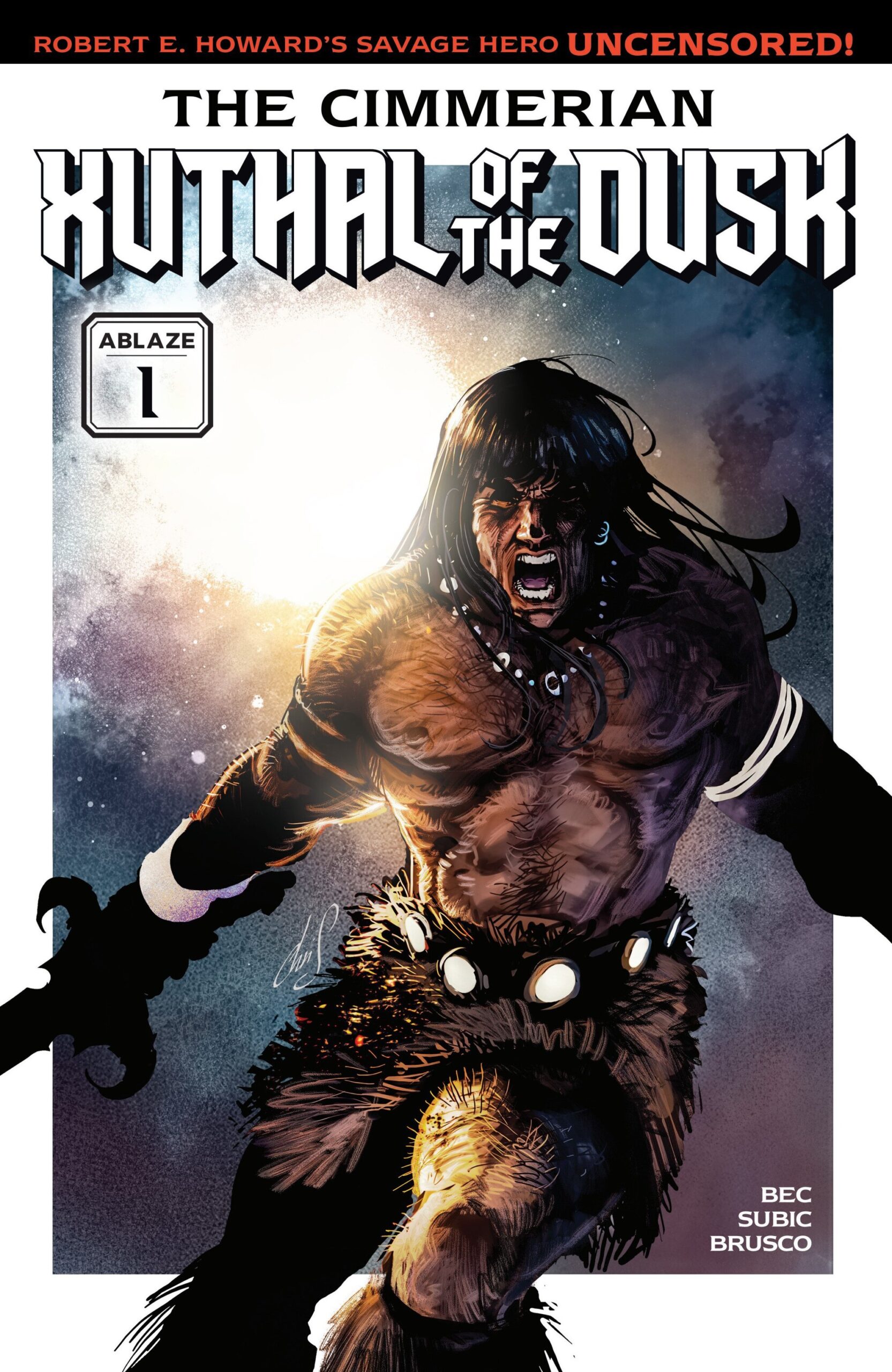
Somebody tell Conan the GPS just rerouted his ass directly through HELL, because The Cimmerian: Xuthal of the Dusk #1 starts with the barbarian already running on fumes and somehow finds a way to make his day considerably worse. WEPA! ABLAZE brings Robert E. Howard’s savage son back with Christophe Bec handling the adaptation and script, Stevan Subić throwing down the artwork, Giulia Brusco on colors, and Rodolfo Muraguchi lettering the madness. Instead of mashing the gas and throwing swords, monsters and blood at us from page one, Bec lets this engine idle under a murderous desert sun. Conan and Natala are stranded in a wasteland where thirst is the first villain, exhaustion is riding shotgun, and death is practically pacing alongside them waiting for somebody to fall over. Then something glimmers on the horizon. Xuthal. Beautiful from a distance. Probably salvation. Yeah, right. Anybody who’s ever read Conan knows the universe does not hand this dude complimentary bottled water and a hotel key. If Conan sees paradise sitting in the middle of nowhere, somebody better check the basement.
Bec understands that this opening works because he does not rush the suffering. The desert gets room to breathe, which is wild considering breathing out there looks painful as hell. Every mile feels heavy. Natala is physically finished while Conan keeps moving because apparently stubbornness is one of the Cimmerian’s internal organs. Their relationship establishes the stakes without needing some giant exposition dump. She reacts like an actual human being staring down dehydration and death. Conan reacts like Conan. Drink the water. Stop wasting strength. Get up. Keep moving. When she cannot, he carries her. There is something wonderfully brutal about his practicality because Bec never turns him into a motivational speaker wearing fur underwear. Conan does not deliver inspirational speeches. He survives. Even compassion comes out looking like an order. That contrast gives the early pages their pulse, and when Bec briefly opens the throttle to show how these two landed in this mess, the flashback hits harder because we have already experienced the consequences. The battle imagery arrives like somebody kicked open a garage door while the motor was redlining, then we are dumped right back into the eerie quiet.

Stevan Subić, though? Fam. THIS DUDE CAME TO WORK. His desert is not some clean yellow backdrop with a cactus thrown in because somebody remembered the story happens somewhere hot. The terrain looks ancient, diseased and hungry. Rock formations curve like petrified beasts. Dead animals rot into the scenery. Conan and Natala become tiny shapes swallowed by geological monstrosities that make the environment itself feel predatory. Then Subić pivots into warfare and suddenly the page is choking on bodies, weapons, movement and panic. His Conan looks exactly like a man who should scare civilized people without saying a word. Thick. Scarred. Filthy. Powerful without looking polished for a superhero calendar. Subić also understands scale beautifully. Huge horizontal vistas make the characters feel insignificant, while tighter panels slam us into faces, wounds and desperation. When Xuthal finally emerges in the distance, the architecture does not scream generic fantasy castle. It feels foreign. Too pristine. Too improbable. The city almost looks like somebody parked an alien dream in the middle of a graveyard.
Once Conan and Natala cross into Xuthal, the whole visual transmission shifts gears. Now Brusco really starts cooking. Those baked oranges, pale sands and dusty blues gradually surrender to rusty reds, bottomless blacks, icy architectural tones and eventually these poisonous purples that make the later pages feel like we’re reading through a fever dream. That progression matters because Xuthal should not simply look creepy. It should feel wrong before we completely understand why. Doors tower over Conan. Courtyards sit unnaturally silent. Bodies refuse to behave according to the normal operating manual of life and death. Strange symbols and impossible interior designs keep piling up. Bec lets Conan investigate instead of immediately sending him into berserker mode, which gives us another side of the character people sometimes forget. Conan ain’t stupid, folks. Dude is suspicious because suspicious people tend to live longer in Hyboria. He notices blood. He watches shadows. He tests what is real with steel when necessary. Meanwhile Natala becomes our fear gauge, registering exactly how deeply messed up this place feels while Conan keeps pushing deeper because returning to the desert is basically choosing a slower death.
Muraguchi’s lettering deserves flowers too because this is a narration-heavy adaptation, and that can go sideways fast. Howard’s descriptive language is part of the DNA here, so Bec wisely preserves plenty of that pulpy texture instead of sanding everything down into modern decompressed dialogue. Muraguchi separates narration from speech with those rough black caption boxes, letting the captions become part of the page’s atmosphere instead of floating around like subtitles. There are moments where the prose stacks up and the reading pace deliberately slows, especially during exploration. Readers who want five words per panel and somebody getting decapitated every ninety seconds may tap the brakes there. Me? I think the density mostly works because Subić’s imagery earns the time. You’re supposed to inspect Xuthal. You’re supposed to stare at those walls and wonder what kind of lunatic interior decorator said, “Yo, giant demonic sculpture right there, perfect.” When violence does crack the silence, it comes fast, ugly and matter-of-fact. No superhero posing afterward. Conan handles trouble, wipes the blade mentally and keeps hunting for answers.

There is also a smart little piece of publishing sauce in the back matter that comic heads should appreciate. ABLAZE includes the corresponding portion of Robert E. Howard’s original Xuthal of the Dusk, first published under the title The Slithering Shadow, taking the prose right up to essentially the same point where this first chapter concludes. That turns the issue into something cooler than a basic adaptation. You can literally go from Bec and Subić’s interpretation to Howard’s words and see where the comic expands, compresses or visualizes the material. That’s catnip for readers who dig process and comic storytelling. It also exposes something important about this adaptation: Bec is not trying to apologize for Howard, sterilize him, or rebuild the story into something born yesterday. Some of the character dynamics, especially the way Natala is described and positioned, carry the pulp-era fingerprints of the source. The adaptation works best when Subić’s visual storytelling gives those old narrative mechanics additional physical weight rather than pretending they are not there.
By the final pages, Xuthal of the Dusk #1 has gone from survival adventure to lost-city mystery to supernatural horror without feeling like three different comics welded together behind the shop. That’s the flex. Bec controls the speed. Subić controls the road. Brusco controls the weather, lighting and emotional temperature. Muraguchi keeps Howard’s voice and modern sequential storytelling from colliding head-on. Even the cliffhanger feels properly earned because the issue gives you enough strange business to know something is horribly wrong without emptying the whole monster garage in chapter one. There is danger here that Conan cannot simply understand by swinging harder, and that makes the promise of the next two issues way more interesting.

So yeah, Crusaders, I’m riding with this one. The Cimmerian: Xuthal of the Dusk #1 is nasty old-school sword-and-sorcery filtered through some absolutely ferocious European-style visual storytelling, loaded with sand, steel, sweat, blood and that creeping feeling that Conan may have just exchanged one certain death for something considerably uglier. It respects Howard without turning the comic into a museum exhibit, gives the artwork room to stomp around, and remembers the secret ingredient that makes great Conan work: the barbarian might be the toughest bastard in the room, but the world around him should always feel big enough, ancient enough and insane enough to kill him anyway. Strap in. Xuthal is just opening the garage door, and whatever is revving in the darkness has not even hit the street yet.
CRUSADERS SCORE:
4/5
Based on the work of: Robert E. Howard
Adaptation & Script: Christophe Bec
Art: Stevan Subić
Colors: Giulia Brusco
Letters: Rodolfo Muraguchi
Cover A: Chris Regnault
Cover B: Stevan Subić
Cover C: Blank Cover
Cover D, Virgin Incentive Variant: Chris Regnault
Cover E, Black-and-White Incentive Variant: Chris Regnault
Bonus Back Matter: Robert E. Howard’s original Xuthal of the Dusk prose
Additional Preview: Valhallaw #1
Valhallaw Story: Ben Fisher
Valhallaw Art: Pedro Andreo
Valhallaw Colors: Sivakami Mohan
Publisher: ABLAZE Publishing
Leave a Reply
You must be logged in to post a comment.