
The Serpent of the Sea Review: Finlay Miles’ Haunting Nautical Horror Debut
·Al Mega
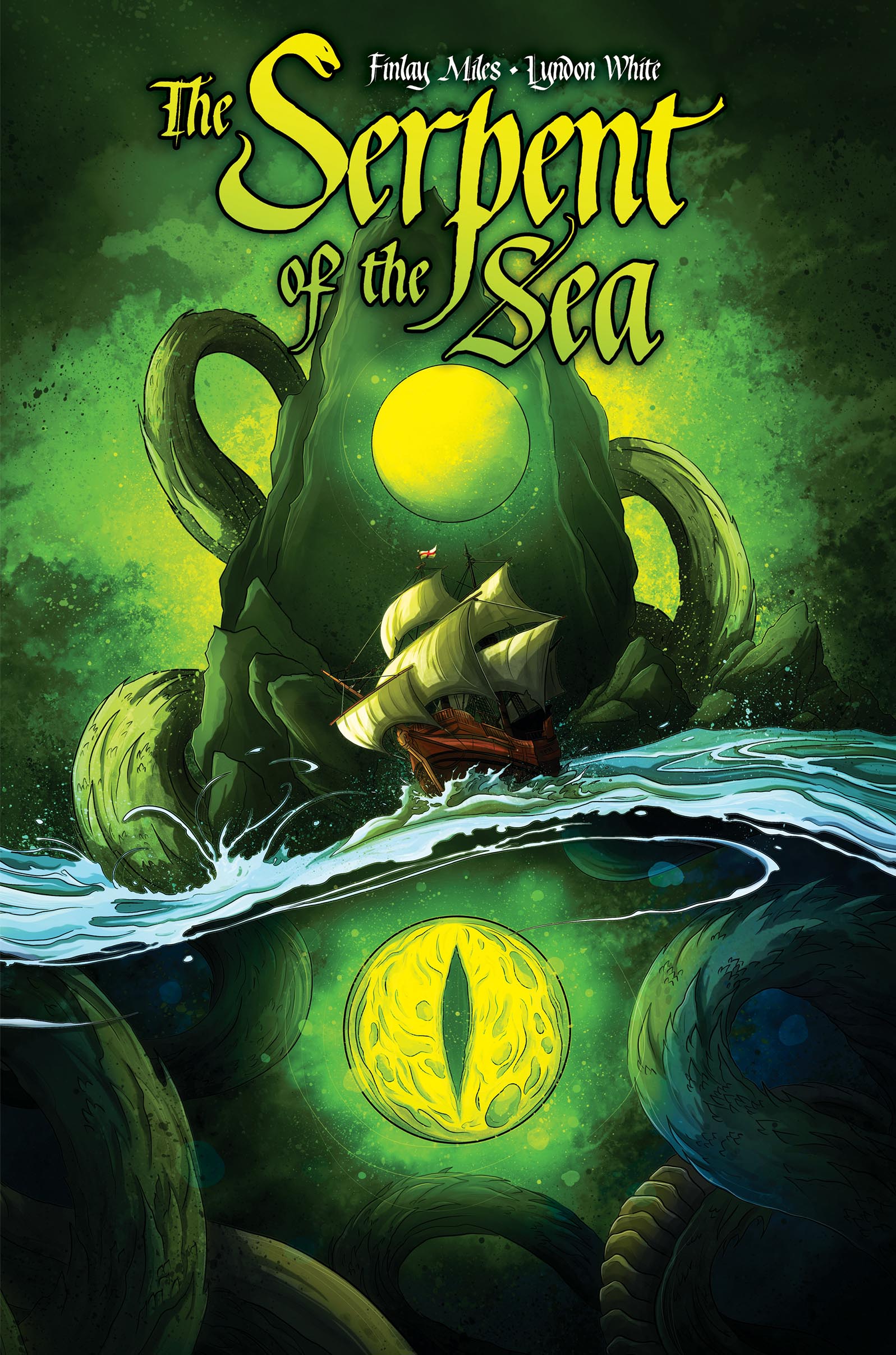
WEEPPPAAAAA, fam, let’s talk about The Serpent of the Sea, because this one comes crawling out the briny dark like it owes the ocean money and the ocean sent collectors. Finlay Miles’ first comic book does not tiptoe into the medium. Nah. It walks straight onto the deck in a storm, looks the reader dead in the eye, and says, “You wanted a sea monster story? Cool. Here’s trauma, myth, madness, maritime dread, and a serpent so ancient it probably remembers when humanity was still figuring out soup.” That is the kind of confidence I love seeing in indie comics. Big swing. Moody swing. Weird swing. And guess what? A lot of it lands.
The story follows Captain Edward Bartholomew Pierce in 1882, a man chasing reports of missing ships across the high Atlantic until that pursuit becomes his personal spiritual beatdown. What begins as a classic nautical mystery quickly mutates into something stranger, nastier, and more psychological. Pierce and his crew sail toward a malignant shoreline that should not exist, and from the jump, the book is telling you, “Do not trust the map. Do not trust the sea. Do not trust this man’s mind.” That is the sauce. That is where the comic hooks you.
For a debut comic, Miles shows real command of atmosphere. The narration has that old-world diary style, full of dread-soaked phrasing and sailor’s-candlelight paranoia. It feels like a confession written with shaking hands. The voice is heightened, theatrical, and thick as fog over the harbor, but that is also part of the charm. This is not modern snark horror. Nobody is cracking TikTok jokes while a cosmic eel eats their sanity. Thank God. This is gothic adventure with salt in its beard.

Now, because around here we keep it 100! The script can get a little text-heavy in spots. Some panels carry a lot of narration, and a few moments might have benefitted from letting Lyndon White’s visuals breathe on their own. You can feel Miles reaching for scale, for literary texture, for that “lost document from the cursed shelf” energy, and I respect the ambition. Still, comics are a dance between words and images, and a few beats could have trusted the art to throw the punch without the narration adding brass knuckles. But for a first comic? That is not a fatal flaw. That is a creator learning the rhythm of the page while already swinging with flavor.
Speaking of the art, Lyndon White absolutely understands the assignment. The visuals are where this book goes from “cool maritime horror” to “yo, why do I feel like the ocean is watching me?” The opening pages throw us into a red-sky nautical nightmare, with the Adrestia cutting across violent waves like a ship already half-condemned. Then the palette shifts, and suddenly we are drowning in greens, yellows, sickly glows, ancient stone, and undersea architecture that feels like Atlantis got possessed by a snake cult. The temple sequences are the book’s visual jackpot. Serpentine statues curl around impossible structures. Green flame licks the edges of reality. The whole thing feels wet, cursed, and ancient.
White’s design work on the serpent is strong because it understands mystery. We get scale. We get teeth. We get eyes. We get enough to feel the threat without reducing it to a simple monster-of-the-week creature. This thing is not just a big snake doing big snake activities. It feels like an idea with fangs. A mythological insult. A nightmare that swims. The way its presence invades the page through sound effects, shadows, coils, and that haunting green glow gives the creature weight before it fully erupts into view. When it finally appears in full, it is a proper “nah, I’m good, I’m moving inland” moment.

What really works is how The Serpent of the Sea plays with ambiguity. Did Pierce survive something supernatural? Did he lose his mind? Did the sea spit him back out as a warning, or as bait? The book does not over-explain itself, and that is smart. A lesser comic would turn the serpent into lore homework. “Chapter One: The Snake God’s Tax Records.” Nah, we are good. Miles keeps the mystery alive. He gives us enough mythic architecture, hooded figures, strange language, ancient carvings, and impossible geography to suggest a massive hidden mythology beneath the surface, but he does not flatten it with too much exposition. The unknown stays unknown. That is where fear lives.
If there is one area I wanted slightly more from, it is emotional connection to the crew before catastrophe hits. The early disaster is visually powerful, but a little more time with the sailors could have made the loss cut deeper. The story is clearly Pierce’s nightmare, and the focus is intentionally narrow, but even one or two extra human details among the crew would have added weight to the wreckage. That said, the compact structure gives the book the feel of a cursed short story, and there is real power in that format. It hits, it coils, it leaves.
As a debut from Finlay Miles, The Serpent of the Sea is impressive because it knows exactly what kind of ghost it wants to be. It is not chasing cheap shock value. It is a mood piece with teeth, a maritime horror confession soaked in myth, madness, and deep-sea dread. Lyndon White’s artwork brings the whole thing to life with style, texture, and that beautifully poisonous green glow that sticks in your brain like a bad dream you had after eating gas station sushi at midnight. Don’t do that, by the way. Respect your stomach, boss.

Overall, The Serpent of the Sea is a strong, atmospheric, visually striking first voyage. It is eerie, polished, and confident enough to leave questions hanging in the air like fog over the docks. Finlay Miles has planted a flag here, and Lyndon White helps make that flag look like it was stitched from seaweed, old bones, and bad omens. For fans of gothic horror, nautical mystery, cosmic dread, and indie comics with ambition in their lungs, this one is absolutely worth diving into. Weepppaaaaaaaaaa…
CRUSADERS SCORE
3.5/5
Get your copy at:
https://lyndonwhite.com/shop/
Story: Finlay Miles
Art, Letters & Design: Lyndon White



Leave a Reply
You must be logged in to post a comment.