
Fake Streams, Real Money: Music Industry Finally Takes Aim at Streaming Fraud
·Daniel Black
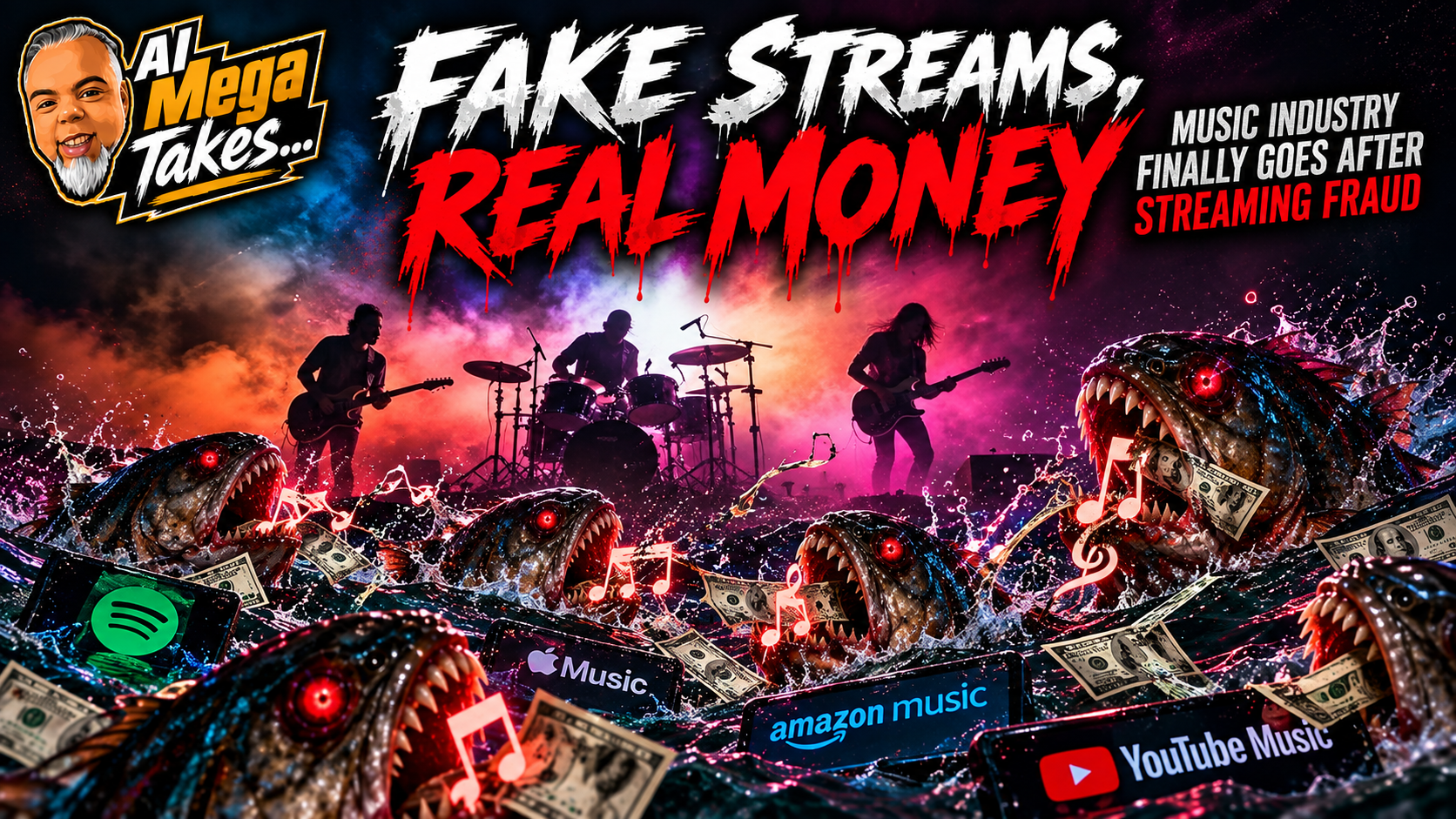
Every musician already knows this shit, but let’s say it anyway: numbers can lie. You see a song with 100,000 streams and you naturally assume people actually listened to it, maybe shared it, maybe discovered a new artist and kept coming back. That’s what those numbers are supposed to represent. What they should not represent is somebody sitting behind a wall of bot accounts, running disposable tracks over and over until fake plays start turning into real royalty money.
That’s not success, that’s gaming the system. And the part that pisses me off is that the money doesn’t just magically appear from nowhere. Streaming revenue comes out of a finite pool, so every fake play grabbing a piece of that pool is taking something away from somebody who actually earned their audience. IFPI describes streaming fraud exactly that way, with bad actors uploading tracks through distributors and then using armies of bots to manufacture artificial plays and siphon money away from legitimate creators.
Now the music business says it finally wants to put some structure around stopping it. IFPI has launched the Streaming Integrity Initiative, bringing in Sony Music Group, Universal Music Group, Warner Music Group and a long list of distributors and independent-music organizations including ADA, AWAL, CD Baby, Ditto Music, FUGA, HYBE, IMPALA, Merlin, Symphonic, The Orchard and Virgin Music Group. That’s a lot of muscle behind one idea, and on paper the idea makes sense: stop fake streams before they steal more money from real artists.
Ya’ already know where I’m going with this, fam. I’m not clapping because a bunch of companies signed a document and everybody smiled for the press release. I want to know what happens after that. I want to see how many fake uploads get blocked, how many repeat scammers get shut down, how much money stays in the royalty pool and whether real musicians actually feel any difference when the statements and headlines are gone.
Streaming manipulation is not just some kid telling his boys to leave his song playing overnight. We’re talking about people building entire operations around artificial listening, mass uploads and fake activity that makes a track look successful even when nobody is really there. Once AI entered the picture, that same scam got a bigger engine, because now somebody can create a ridiculous amount of synthetic content without needing a band, a studio, months of writing or any of the things that normally go into making actual music.
And before anybody turns this into some lazy humans-versus-machines argument, read the room. AI didn’t invent streaming fraud. People were manipulating numbers long before generative AI became everybody’s new favorite argument. What AI did was make it cheaper, faster and easier to scale, which means somebody who already wanted to cheat the system can now throw a lot more material at it.
Deezer reported that it was receiving more than 60,000 fully AI-generated tracks every day in January 2026, and the company said up to 85% of streams on AI-generated music during 2025 were fraudulent. Those are insane numbers, especially when you remember there are real musicians trying to build an audience one listener at a time while somebody else is basically trying to manufacture both the song and the audience around it.
The initiative asks distributors to strengthen identity and rights verification, check submitted music for suspicious activity or infringement, investigate suspected fraud, act against repeat offenders and share information where legally allowed. It also asks companies to keep measuring whether their anti-fraud systems are actually working as scammers change their tactics.
That last part matters because scammers are not going to get caught once and suddenly retire. You shut down one account, they try another one. You catch one upload pattern, they change the pattern. You block one distributor, they look for another distributor. If a fraud operation gets thrown off one platform and can immediately walk through another door with the same bullshit, then we didn’t stop anything, we just made them change buses.
That’s why stronger identity checks could end up being one of the best parts of this initiative. Distribution has become easier than ever, and that has been fantastic for independent artists because you no longer need some executive sitting behind a giant desk deciding whether your music deserves to exist. But that same easy access can be abused, and that’s where the industry has to figure out how to tighten the door without slamming it in the face of legitimate creators.
The balance is important because a real indie artist should not suddenly need a damn FBI background check just to release a single. Ask for proof of ownership, verify identities, make sure somebody isn’t stealing someone else’s work and keep track of repeat offenders, but don’t create some automated nightmare where an innocent musician gets flagged and then spends three months screaming into a customer-service form nobody answers.
We also have to keep the AI part of this conversation clean. An artist using AI somewhere in the process does not automatically make the music fraudulent, and IFPI has separately laid out principles allowing certain human-led uses of AI while drawing lines around fully synthetic or unauthorized material and fraudulently boosted streams. The problem is not simply whether a machine touched the process; the problem is deception, stolen rights and fake activity designed to pull money out of the system.
That’s really the line for me. Fake identities, stolen ownership, fake listeners and artificial streams are the problem. If somebody uses technology creatively and real human beings choose to listen, we can have a completely different conversation about that. But once somebody starts counterfeiting the audience too, now we’re not talking about creativity anymore, we’re talking about a scam.
Now look at who signed this thing. You have Sony, Universal, Warner, ADA, AWAL, CD Baby, Ditto, FUGA, HYBE, IMPALA, Merlin, Secretly Distribution, Symphonic, The Orchard, Virgin Music Group and plenty more. That’s not a weak starting lineup, and IFPI says more distributors and digital services are being invited to join.
But not everybody is sitting at that table. Music Business Worldwide reported that DistroKid had not signed the initiative at launch despite the company claiming it distributes roughly 40% of all new music in the world for more than four million artists. TuneCore, Believe and UnitedMasters were also absent from the initial group, while CD Baby signed on.
Now am I saying that makes any of those companies guilty of something? Nah, fuck that, because that’s not what the evidence says and we’re not going to turn questions into accusations just because it makes a sexier headline. But am I going to ask why some of the biggest distributors are not part of an initiative built around stopping fraud from moving between distributors? Hell yeah, because if everybody is supposed to be protecting the same ecosystem, those empty chairs matter.
Comic Crusaders has already looked at a separate royalty dispute involving DistroKid and Amazon Music, so this opens another conversation about how much responsibility distributors should carry when they sit directly between independent artists and the biggest streaming services in the world. If you’re the doorway into the system, at some point we have to talk about what you’re doing when somebody repeatedly walks through that door carrying garbage.
The other thing that gives me pause is that this whole thing is voluntary. That’s where I start slowing down on the applause, because the industry can promise whatever it wants, but promises are cheap when there’s no outside audit, no required public compliance report and no announced penalty for a company that signs on and then barely does anything.
I want the numbers. I want to know how many fraudulent uploads were stopped, how much money stayed in legitimate royalty pools, how many repeat offenders were identified and how often legitimate artists got caught in the system by mistake. That’s how we’ll know whether this is actually working or whether everybody framed another set of principles and hung them in an office somewhere.
Musicians have heard beautiful promises from the music business forever, so excuse me if I’m not ready to throw confetti yet. What matters is what happens once nobody is looking at the press release anymore, because that’s when the boring work starts and that’s when we find out who was serious.
This is also not some tiny side issue. Global recorded music revenue reached $31.7 billion in 2025, with paid streaming accounting for more than half of total recorded-music revenue. When the streaming economy is that damn big, fraud taking even a small slice of it represents real money being redirected away from legitimate artists and rights holders.
For a superstar, that distortion may be another ugly number buried inside a massive operation. For an independent artist counting every stream, that money can mean mixing, mastering, promotion, studio time or whether they can even afford to put out the next record. That’s why this shit matters beyond some industry conference or corporate talking point.
Independent artists should probably prepare for tighter verification too. Keeping split sheets, contracts, collaborator agreements, sample licenses and ownership information organized may become even more important as distributors start asking harder questions about who uploaded what and who actually owns the rights. That part is probably overdue, as long as the process doesn’t treat every unfamiliar artist like they walked into the building wearing a ski mask.
The music business finally appears to understand that fake streams are not harmless promotion tricks. They steal money, screw with recommendations, pollute the numbers and make legitimate success harder to measure. That’s a good start, but at the end of the day the real question is whether the industry puts enough teeth behind this initiative to make scammers actually feel it.
Real artists deserve real listeners, real numbers and real royalties. If 100,000 people listened to your record, you earned that shit and you should be proud of it. If 100,000 bots listened while nobody was actually in the room, then come on, man, get the fuck outta here.


Leave a Reply
You must be logged in to post a comment.